Functionally-Guided Multiomics Profiling of Human Systemic Inflammation Identifies Myeloid Therapeutic Targets
At the Keystone Autoimmunity & Autoinflammation symposium in 2026, Graph’s co-founder and CSO Bojan Vilagos presented our search for targets in systemic inflammation beyond NLRP3 in a talk and poster. Drugs against the NLRP3 inflammasome have shown limited efficacy, and a key limitation is that they don’t suppress pyroptosis, an inflammatory form of cell death that can occur independently of NLRP3.
We primed blood immune cells (PBMCs) with Apo-SAA to induce systemic inflammation, then screened more than 150 perturbations on top of that background. In high-content imaging, more than 60 of them modulated monocyte pyroptosis and survival.
Perturbations that reduced pyroptosis also increased monocyte survival, and some also reduced interaction between the surviving monocytes, a sign of dampened communication as inflammation resolves.
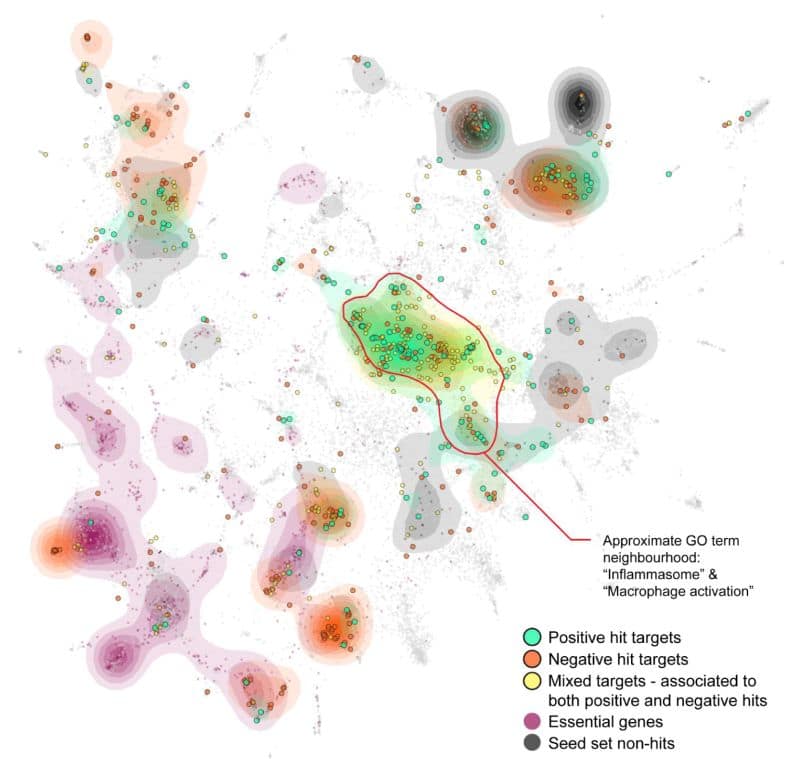
To get from these compounds to targets, we used Autograph, our method for predicting targets from screening hits and known protein interactions, to rank proteins by their association with reduced pyroptosis. The targets most associated with it group around switching the inflammasome off via autophagy, and several have druggable structures. These are the actionable targets for our next round of lab-in-the-loop testing and validation.